 Retire Plan
the rules that move the number
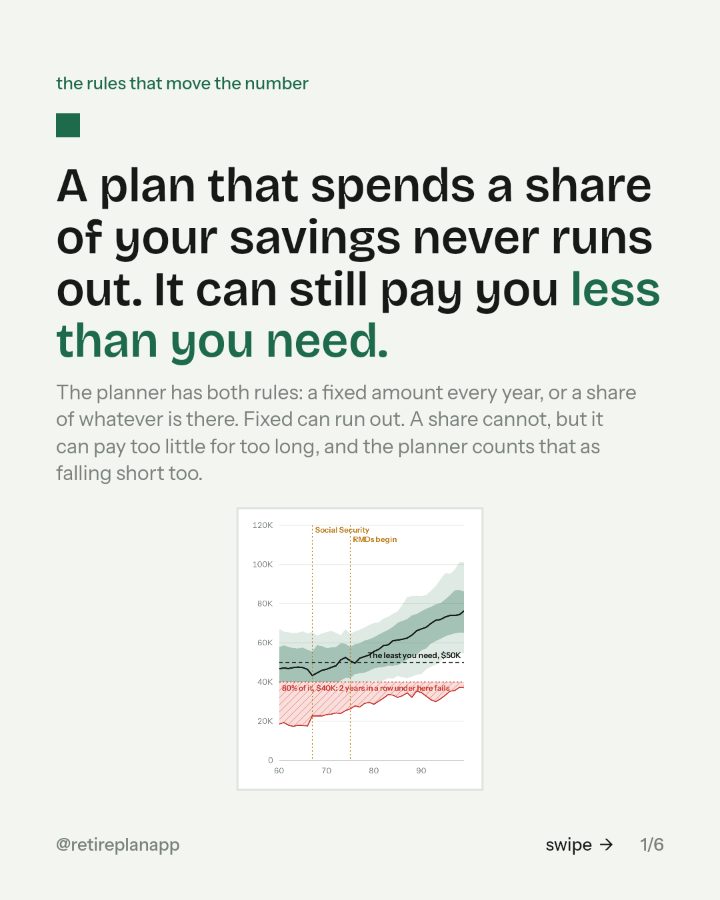
A plan that spends a share of your savings never runs out. It can still pay you less than you need.
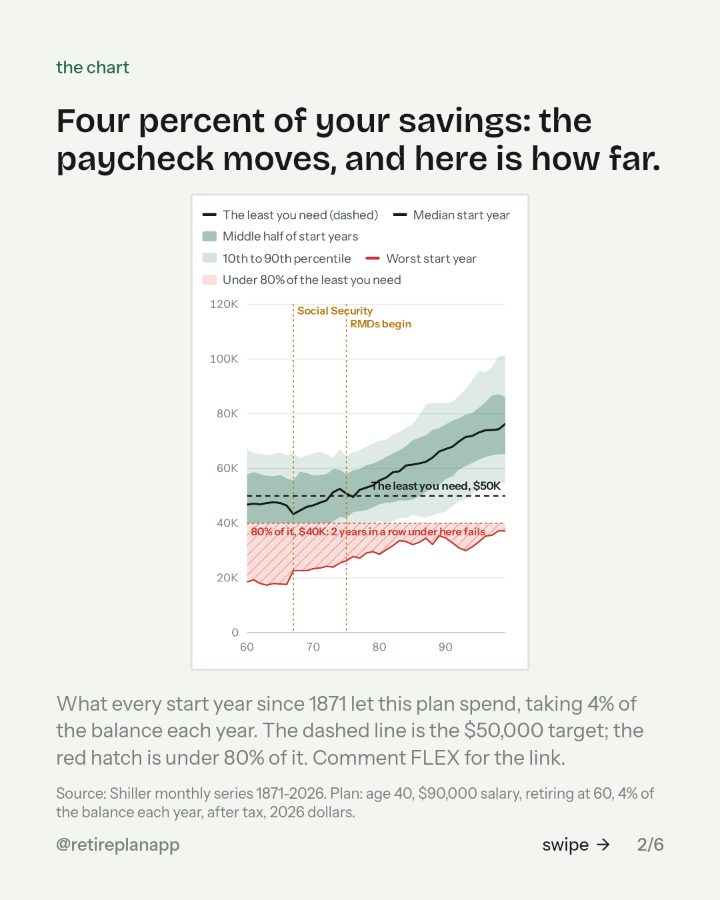
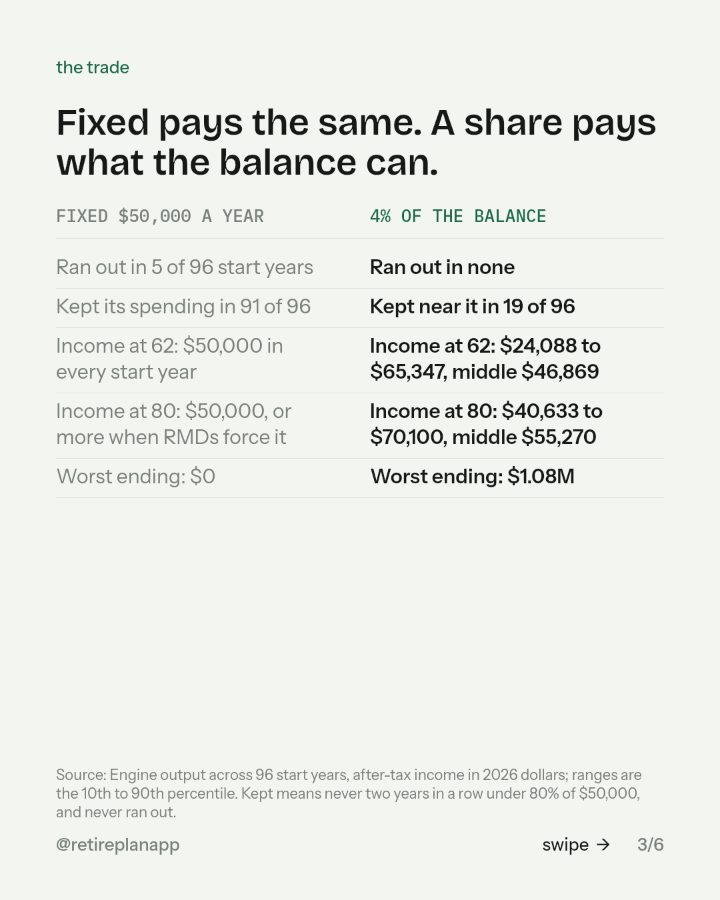
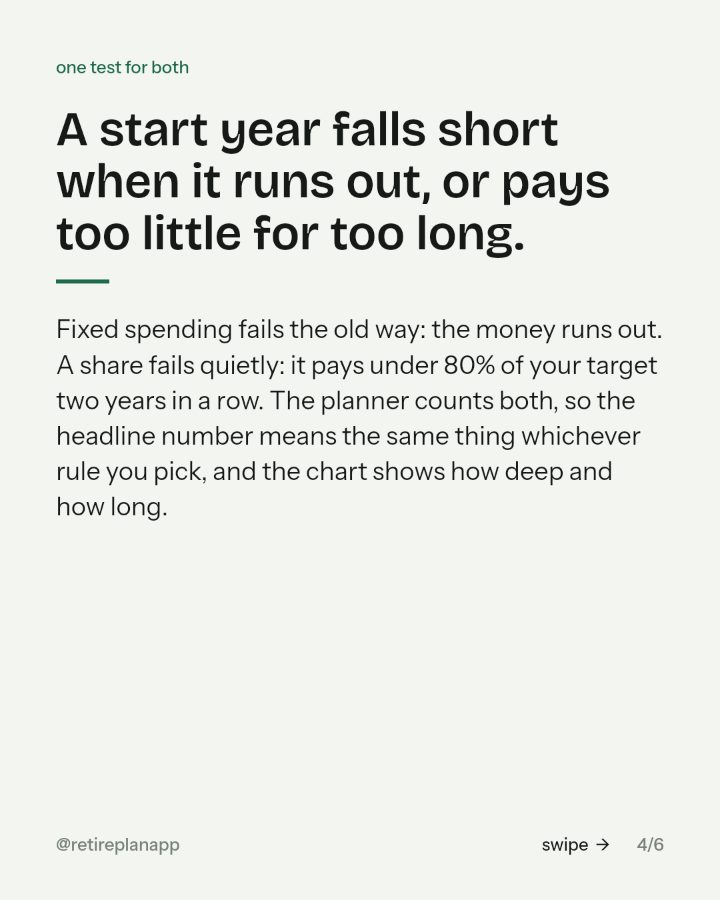
The planner has both rules: a fixed amount every year, or a share of whatever is there. Fixed can run out. A share cannot, but it can pay too little for too long, and the planner counts that as falling short too.
You asked for the link. The planner every chart came from is one tap away; the slides are below if you want them again.
Open the planner Type in one paycheck. About three minutes, in the browser.

Where to go next
Retire Plan
Type in one paycheck and it runs your plan through every year of market history since 1871, with the taxes worked out. About three minutes, in the browser.
Open itSources: Shiller monthly series 1871-2026. Plan: age 40, $90,000 salary, retiring at 60, 4% of the balance each year, after tax, 2026 dollars.; Engine output across 96 start years, after-tax income in 2026 dollars; ranges are the 10th to 90th percentile. Kept means never two years in a row under 80% of $50,000, and never ran out..