 Retire Plan
semi-retirement
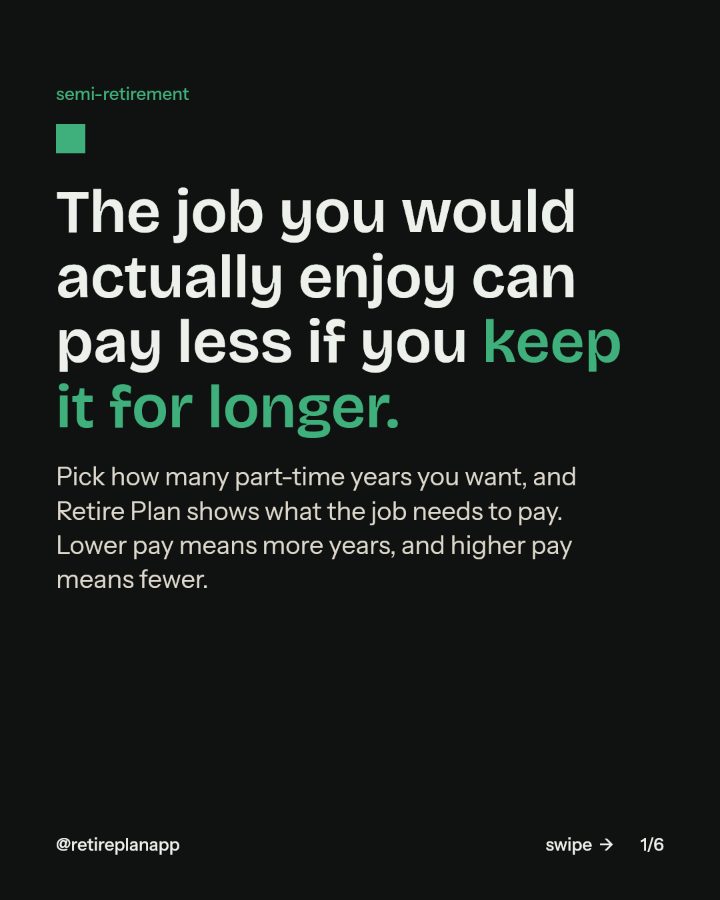
The job you would actually enjoy can pay less if you keep it for longer.
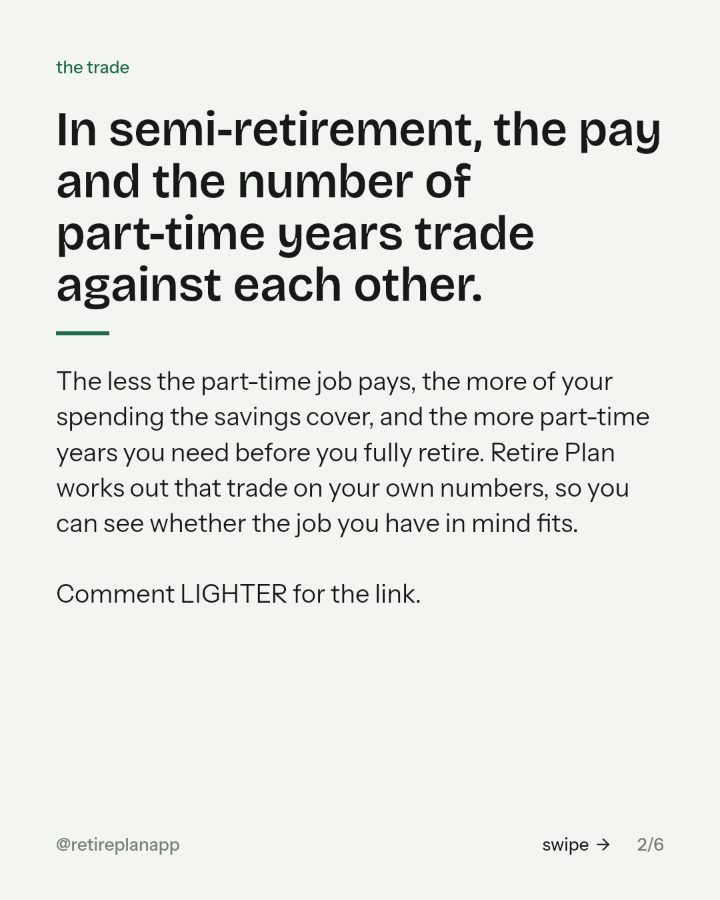
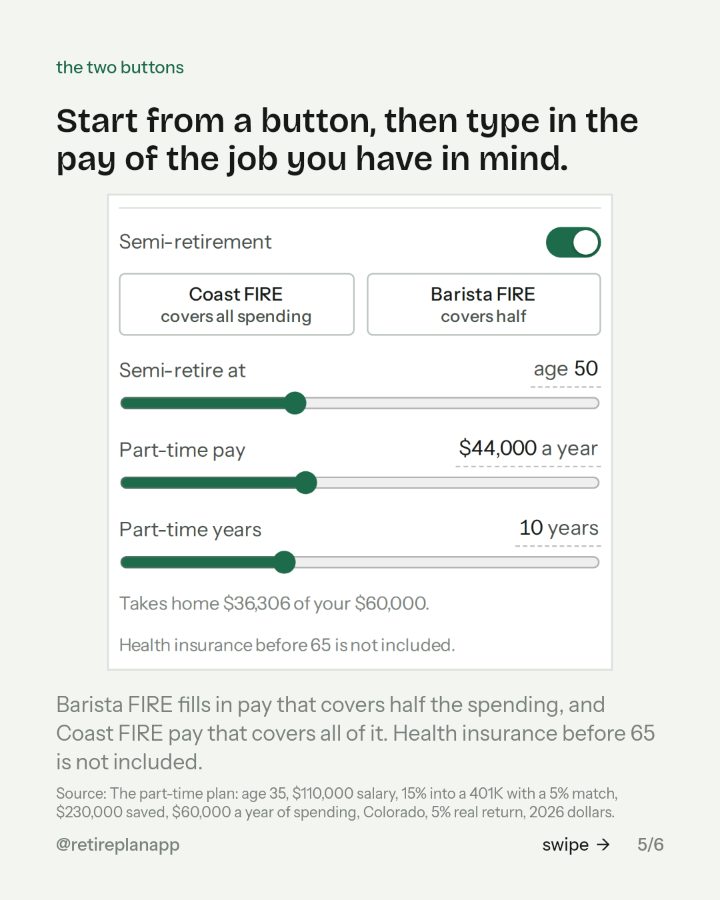
Pick how many part-time years you want, and Retire Plan shows what the job needs to pay. Lower pay means more years, and higher pay means fewer.
You asked for the link. The planner every chart came from is one tap away; the slides are below if you want them again.
Open the planner Type in one paycheck. About three minutes, in the browser.
Where to go next
Retire Plan
Type in one paycheck and it runs your plan through every year of market history since 1871, with the taxes worked out. About three minutes, in the browser.
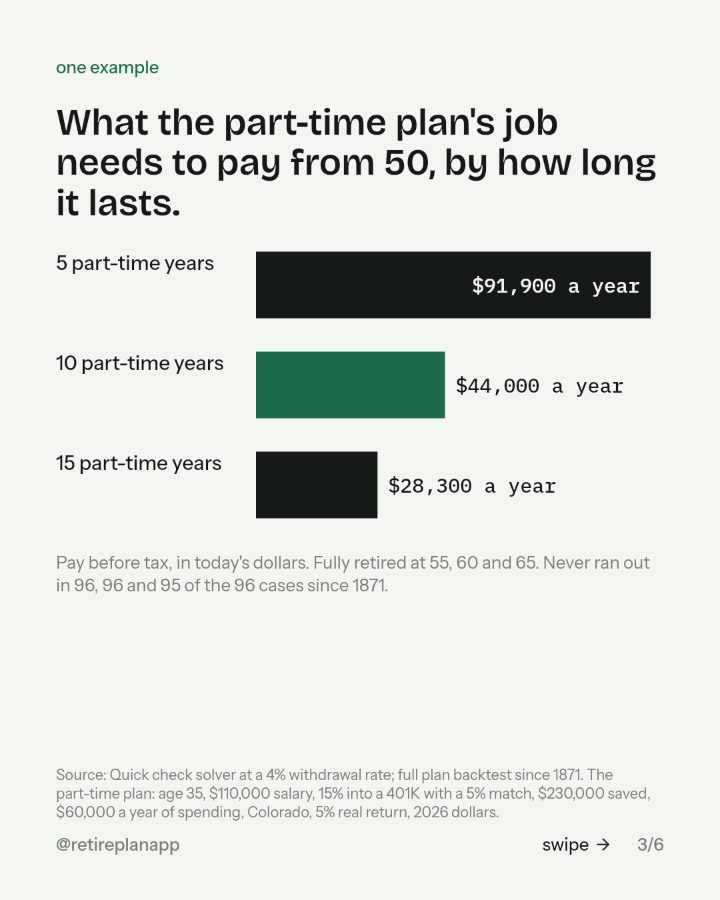
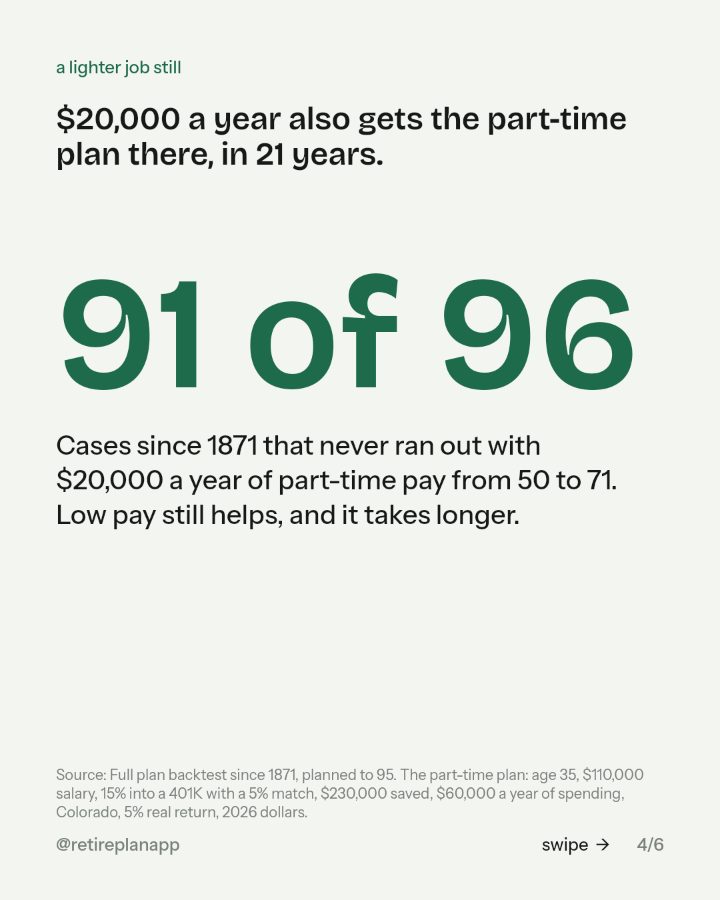
Open itSources: Quick check solver at a 4% withdrawal rate; full plan backtest since 1871. The part-time plan: age 35, $110,000 salary, 15% into a 401K with a 5% match, $230,000 saved, $60,000 a year of spending, Colorado, 5% real return, 2026 dollars.; Full plan backtest since 1871, planned to 95. The part-time plan: age 35, $110,000 salary, 15% into a 401K with a 5% match, $230,000 saved, $60,000 a year of spending, Colorado, 5% real return, 2026 dollars.; The part-time plan: age 35, $110,000 salary, 15% into a 401K with a 5% match, $230,000 saved, $60,000 a year of spending, Colorado, 5% real return, 2026 dollars..